
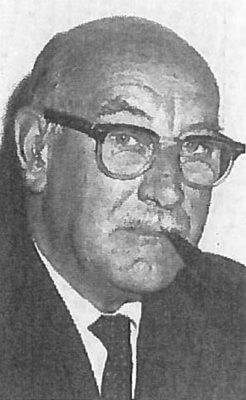
Tull was legendary for designing entire courses by walking the property and visualizing routing and holes in his mind, only later transferring his vision to topographical maps for construction teams.
Alfred H. Tull (1897–1982) was a prominent golf course architect known for his influential work across the United States. Born in Brighton, Sussex, England, he immigrated first to Canada in 1907, then to the U.S. in 1914. Tull began his career building and supervising courses with his brother William, collaborating with notable architects Walter Travis, A.W. Tillinghast, and Devereux Emmet. In 1924, he joined Emmet as a design associate, becoming a full partner in 1929 in the renowned Emmet, Emmet & Tull firm. After Emmet’s death in 1934, Tull went independent, establishing a reputation for an uncanny ability to lay out courses by walking the land and visualizing holes without plans—a rarity in the field. Over his career, he was responsible for numerous respected courses, including the Bethpage Yellow Course (NY), Norbeck Country Club (MD), Ash Brook (NJ), and others. He was recognized by the American Society of Golf Course Architects as a member and later a Fellow.
Read More
Read Less
No items found.