
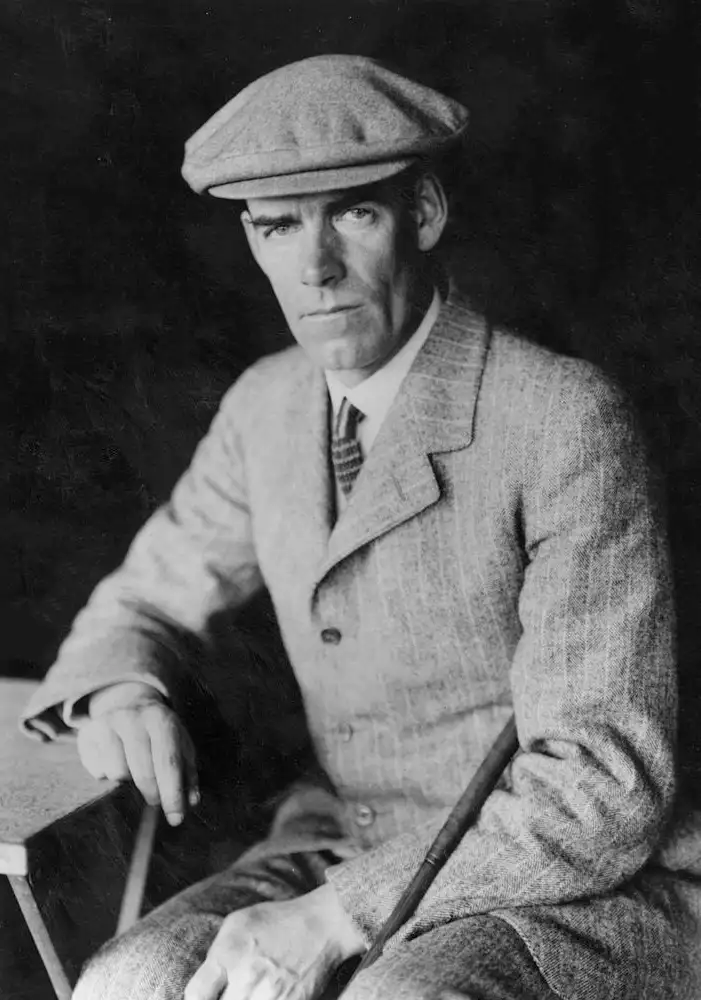
George is the last player to have won a major championship (the Open) with a round as high as 80, showcasing an extraordinary comeback despite early struggles. The spot where he famously faltered during the 1922 Open's closing moments is now known as "Duncan’s Hollow."
George Duncan was a Scottish professional golfer and golf course architect born on September 16, 1883, in Methlick, Aberdeenshire, Scotland. Although he was renowned mostly for his playing career, which included winning the 1920 Open Championship in one of the sport’s greatest comebacks, Duncan also contributed to golf course design. He worked alongside George Thomas in designing Spring Lake Golf Club in New Jersey in 1910, marking one of his early forays into architecture. Duncan was celebrated not just for his achievements on the course but also as a master teacher and swing analyst, earning the nickname "the pro's pro."
His playing style was famously fast-paced, minimizing practice swings and quickly executing shots. Duncan competed in the first three Ryder Cups and captained the victorious Great Britain team in 1929. Beyond golf, his design work, though limited compared to other architects, displayed an understanding of strategic course layout that complemented natural landscapes.
Duncan passed away in 1964, leaving a lasting legacy as both a champion golfer and a contributing figure in golf course design.
%20MH.webp)