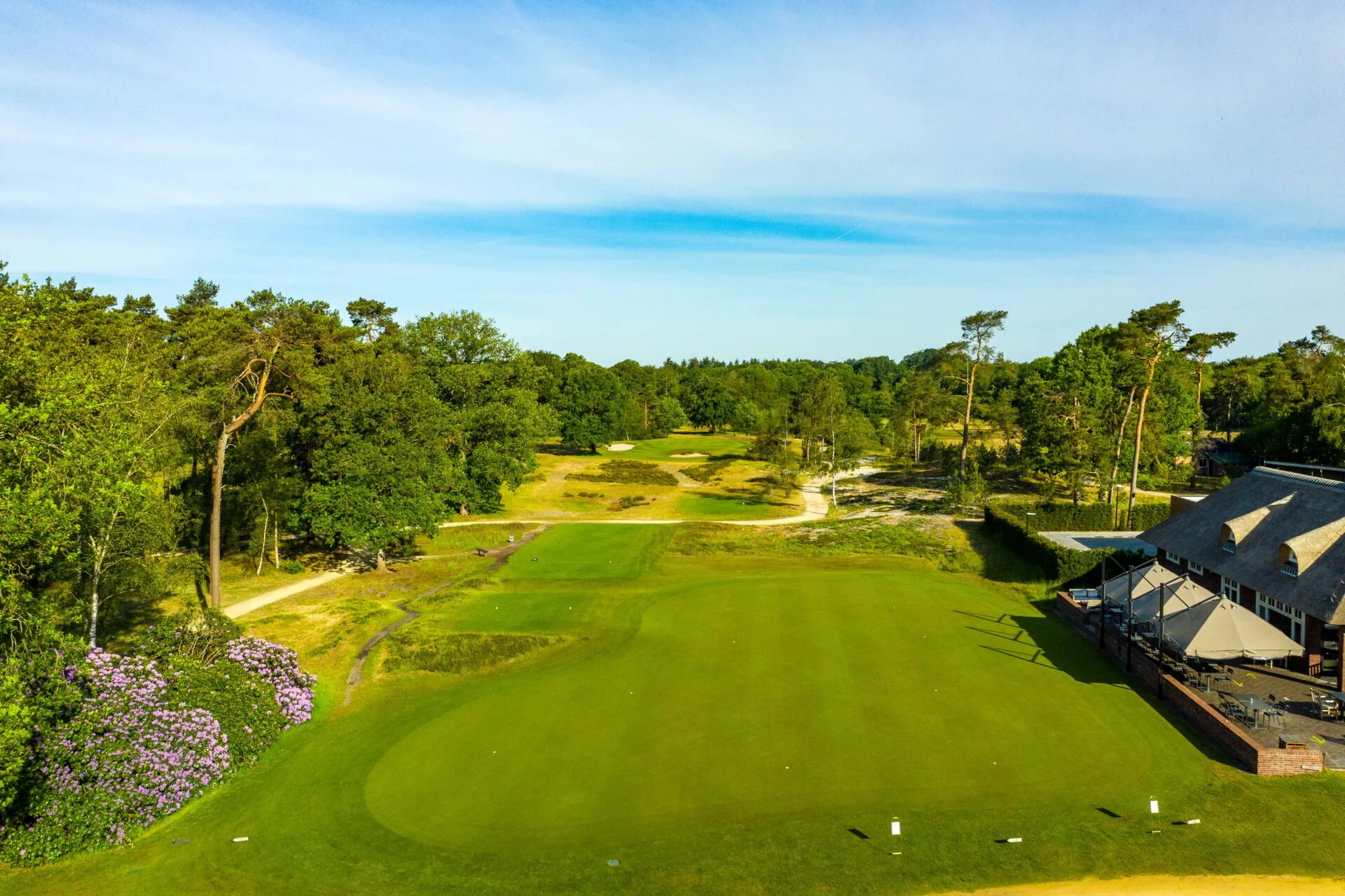

Henry Burrows won the Dutch Open three times and designed the original nine holes at Hilversum Golf Club, later also serving as the professional at several clubs throughout Benelux and Luxembourg.
Henry Burrows was an English golf course architect and professional, born in Sunninghill, Berkshire in 1891. His career was closely intertwined with the development of golf in the Netherlands and Belgium, particularly in the early 20th century. Starting as a caddy and assistant at Sunninghill club, he later laid out the original nine holes at the Hilversum Golf Club in 1910, and returned to further design nine holes there in 1922, contributing significantly to Dutch golf's rise. Burrows became a sought-after instructor and course designer, working at various clubs such as Doornsche, Domburg, Royal Antwerp, and St André sur Mer. He won the Dutch Open three times (1920, 1921, 1923) and continued to design and develop courses across the Benelux, including serving as Head Greenkeeper at Waterloo and designing the Grand-Ducal Golf Club in Luxembourg. Later in life, he returned to England, working at Reading and for Sutton & Sons, the golf course seedsmen. Burrows left a lasting legacy through his contributions to golf architecture and professional play.
Read More
Read Less