
Less than an hour from Denver, Michael Keiser is building his most democratic dream yet: a windswept links wonderland on 2,000 acres of Colorado ranchland that anyone can play.
For decades, Michael Keiser has been golf's great romantic, carving transcendent courses into dunes from Oregon to Ireland. Bandon, Sand Valley, Cabot. Each one a pilgrimage site. Each one a little hard to reach. That changes with Rodeo Dunes.
Nestled in the high plains near Roggen, Colorado, just 50 miles from downtown Denver and 42 miles from the airport, Rodeo Dunes is Dream Golf's 14th course and its first true public resort. No membership. No lottery for the chosen few. Just tee times, caddies, and some of the finest minimalist golf architecture you'll find anywhere in America.
"The moment I set foot on this land, I knew this was the place," Michael Keiser said. "The dunes are perfect, tall and rolling, with unlimited possibilities for great golf holes."
The Land
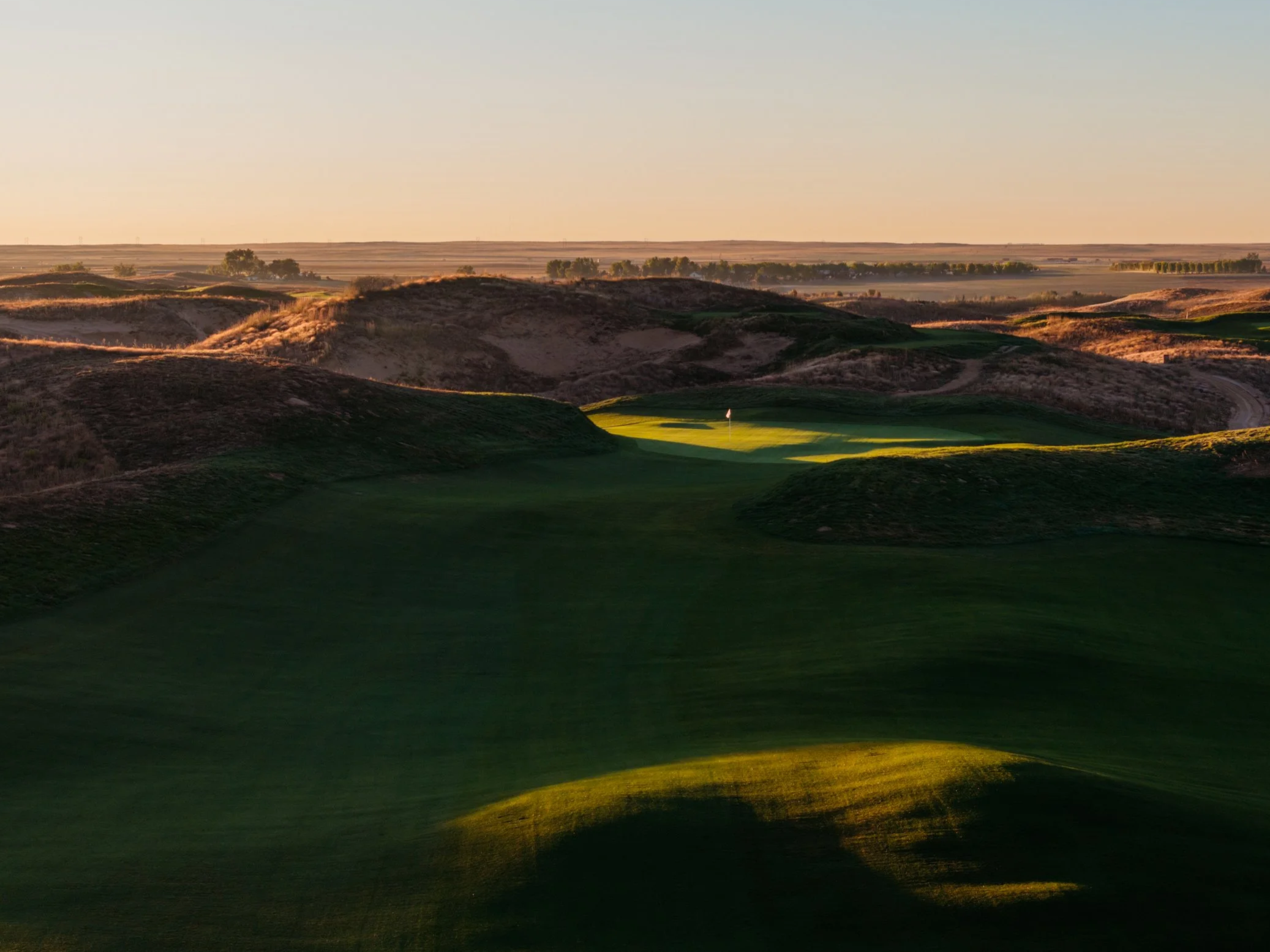
The property sits on what was once the Cervi family ranch, a working cattle operation since 1883. Spanning over 2,000 acres of treeless, windswept terrain, the site features towering sand dunes that rise 85 to 90 feet, sculpted by wind and time into natural golf canvas. No significant water. Minimal vegetation. Just sand, sky, and the kind of topography architects dream about.
"The Keisers have done it again," Bill Coore said. "This is an exceptionally gifted site."
Coore and his partner Ben Crenshaw, legends of minimalist design whose Sand Hills course in Nebraska set the template for American links golf, are building the first 18 at Rodeo Dunes. Construction began in summer 2024, and as of October 2025, their course is nearing completion, hand-shaped into the dunes with the same restrained artistry that made Bandon Dunes and Sand Valley iconic.
The Second Course and a Solo Debut
Running parallel to the Coore/Crenshaw layout is a second 18-hole course, this one designed by Jim Craig in his first solo project. Craig, a longtime associate of Coore and Crenshaw, has worked on some of the most celebrated courses of the modern era. Now he gets his own canvas.
"The possibilities are endless," Craig said. "You dream about working with land like this."
Two debut courses on one property. Two different voices interpreting the same sublime landscape. It's the kind of architectural event that happens maybe once a decade.
The Vision: Public, Accessible, World-Class
Rodeo Dunes marks a philosophical shift for Dream Golf. While Bandon Dunes is technically public, it requires serious planning, airfare, and days off. Sand Valley is remote. Cabot is in Canada. This is different. This is driveable for millions.
"We want this to be a place anyone can experience," said Tom Ferrell, Dream Golf's VP of media and communications. The resort will emphasize caddie service, walking golf, and the kind of laid-back Western hospitality that defined the ranchland for over a century.
Limited public tee times will be available through a drawing system starting in 2026. Full operations, including lodging and the complete guest experience, launch in 2027.
What's Next
The site has room for up to six 18-hole courses, plus plans for a short course and a putting course. Renderings by artist Peter Flory show sweeping vistas of the Front Range framed by rumpled fairways and shaggy dune edges. The aesthetic is pure links: firm, fast, and built largely by hand.
Comparisons to Ballyneal, Colorado's other acclaimed sand dune course, are inevitable. But Rodeo Dunes has something Bally can't claim: it's close. You could play in the morning and be back in Denver for dinner.
The Keisers have spent 30 years proving that great golf doesn't need to be private, exclusive, or manufactured. Rodeo Dunes might be their boldest proof yet. A public resort. A half-hour from the airport. Two world-class courses on land that looks like it was born to host golf.
You don't need a connection. You don't need a tee time six months out. You just need to show up, so pick up your cowboy hat and hit the road.