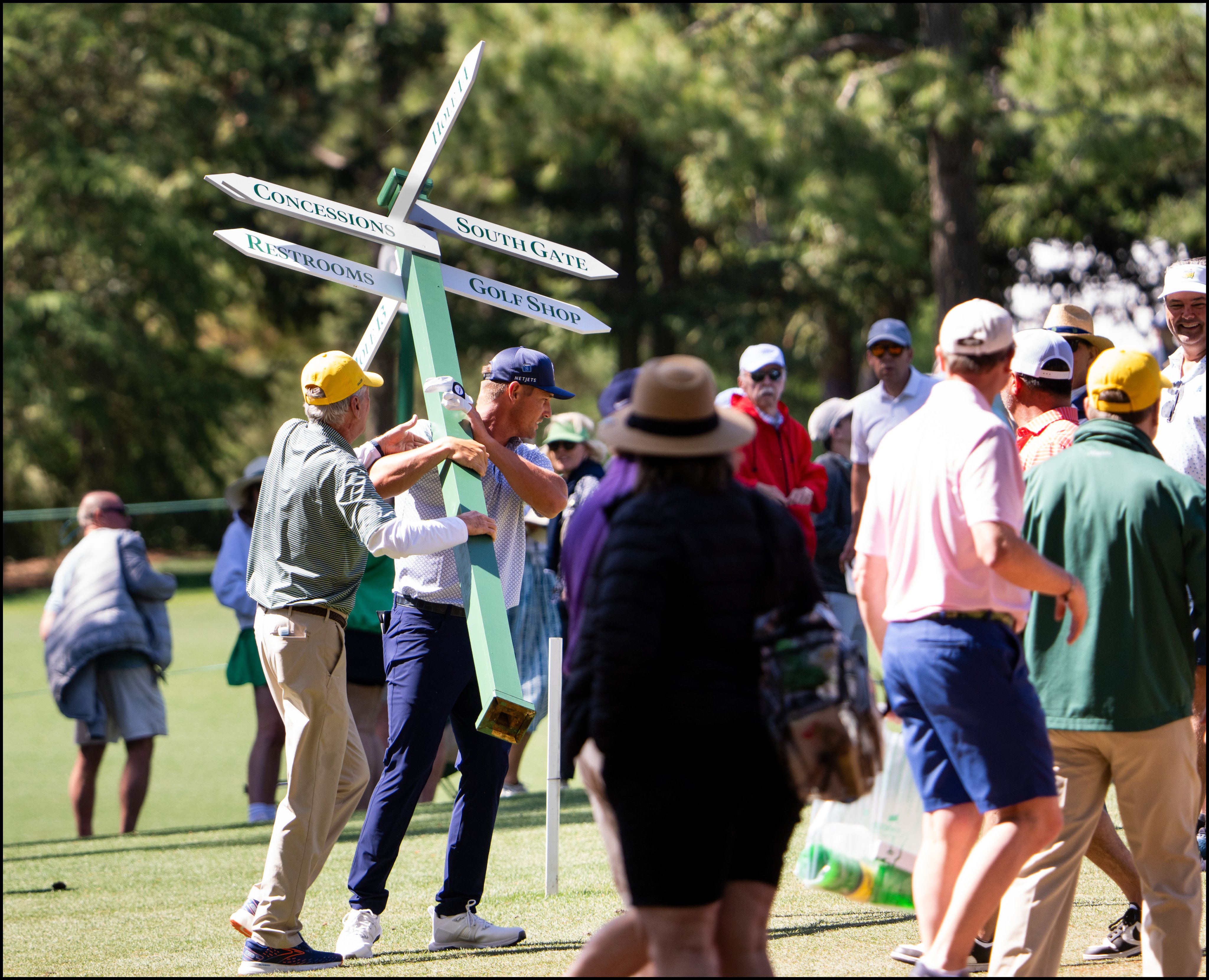

When Bryson DeChambeau found himself in trouble on Augusta's 13th hole, he didn't just move a sign. He ripped it clean out of the Georgia clay.
The Masters Moment Nobody Saw Coming
The second round of the Masters was already testing players with wind-whipped conditions across Augusta National when Bryson DeChambeau, co-leader entering the day, sent his drive careening into the trees on the par-5 13th. What happened next had golf fans and rules officials doing double takes.
Standing in the pines with a large promotional sign blocking his angle to the green, DeChambeau didn't hesitate. He grabbed the sign and yanked it straight out of the ground, tossing it aside to clear his shot path. Cameras captured the moment, and social media exploded with reactions ranging from shock to admiration.
The Bold Move
The sign wasn't a small stake or yardage marker. This was substantial signage planted in the earth, the kind most players would assume was part of the course furniture. But DeChambeau saw an opportunity within the rules and seized it without a second thought.
His aggressive approach to the situation perfectly encapsulated his style of play. While other golfers might have called for a ruling or played around the obstruction, DeChambeau assessed the situation with his trademark analytical mindset and took action.
Rules Officials Weigh In
The real question became whether the move was legal under golf's complex rulebook, especially at a major championship where every detail faces intense scrutiny. Masters officials reviewed the incident and delivered their verdict: perfectly legal.
The key distinction came down to how the sign was installed. Because it wasn't permanently fixed to the ground, it qualified as a movable obstruction under the Rules of Golf. DeChambeau was within his rights to remove it, no different than moving a rake or other temporary course equipment.
No penalty was assessed, and play continued.
DeChambeau Addresses the Controversy
Post-round, DeChambeau faced questions about what ESPN called his "bizarre decision" during a video interview. While the exact wording of his explanation varied across sources, he defended the move as a straightforward application of the rules, emphasizing that he consulted with officials to ensure compliance.
For DeChambeau, it was simply smart golf. For traditionalists watching one of the sport's most hallowed venues, it felt like another example of the scientist-golfer pushing boundaries at Augusta National.
The Bigger Picture
The incident highlighted the tension between DeChambeau's analytical, boundary-testing approach and the Masters' reputation for strict etiquette and traditional decorum. This is the same player who revolutionized equipment preparation, transformed his physique through unconventional training, and consistently challenges golf's established norms.
At Augusta, where patrons still aren't called fans and where the azaleas bloom with postcard perfection, DeChambeau's willingness to tear signage from the ground felt almost revolutionary. Yet the rules backed him completely.
The moment also sparked broader conversations about what constitutes a movable obstruction and how rules knowledge can create advantages at the highest level. Amateur golfers watching at home were suddenly Googling obstruction rules, while tour pros likely filed the play away for future reference.
The Final Word
In a tournament defined by tradition and meticulous course management, DeChambeau's sign removal became one of the second round's most talked-about moments. It didn't matter that officials quickly confirmed the legality. The image of a co-leader physically removing course signage in the middle of a major championship round was pure Bryson.
Whether you see it as gamesmanship, creativity, or simply knowing the rulebook better than most, one thing was clear: at the Masters, where every blade of grass seems sacred, DeChambeau proved that sometimes the most aggressive play is knowing exactly what you're allowed to do.