
Lester George has converted two abandoned landfill brownfields into golf courses, turning hazardous, overgrown areas into lush recreational spaces, a rare and innovative feat in golf course architecture.
Lester George is a Richmond, Virginia based golf course architect renowned for his restoration work on Golden Age classics and innovative new designs on challenging sites. With a background in terrain analysis and a deep respect for history, he has revived layouts by architects like Flynn, Ross and Macdonald while creating modern standouts like Kinloch Golf Club.
Early life and entry into architecture
Lester George was born in Wiesbaden, Germany, in 1955 while his father served in the U S Air Force. Raised in Virginia, he attended the University of Richmond, where he founded the school's orienteering team, honing skills in map reading and terrain navigation. These abilities proved ideal for golf course routing.
George earned a B S from Richmond in 1977 and later studied golf course architecture at Harvard Design School in 1992 and a master's from the U S Army Command and General Staff College in 1998. His military background in map and terrain analysis naturally led to golf design. He began as a design coordinator for Golf Services International, studying under established architects, then co founded Virginia Golf Development before launching Colonial Golf Design in 1991, later renamed George Golf Design.
Philosophy and approach to design
George blends historical reverence with site specific creativity. His terrain reading expertise allows him to visualize routings that fit naturally, whether on rolling farmland, steep mountainsides or brownfields. He prioritizes strategic interest, playability and conditioning, often creating large greens and wide fairways that challenge without overwhelming.
Restorations form his niche, returning Golden Age intent while adapting to modern play. New designs emphasize environmental integration, like converting landfills into playable turf. He is known as the "practice guru" for realistic facilities mimicking on course shots. George donates to First Tee, designing premier courses like The First Tee Chesterfield.
Notable courses and restorations
George has worked on over 100 projects, with 80 plus built, focusing on the East Coast and Japan. Key examples:
- Kinloch Golf Club, Manakin Sabot, Virginia
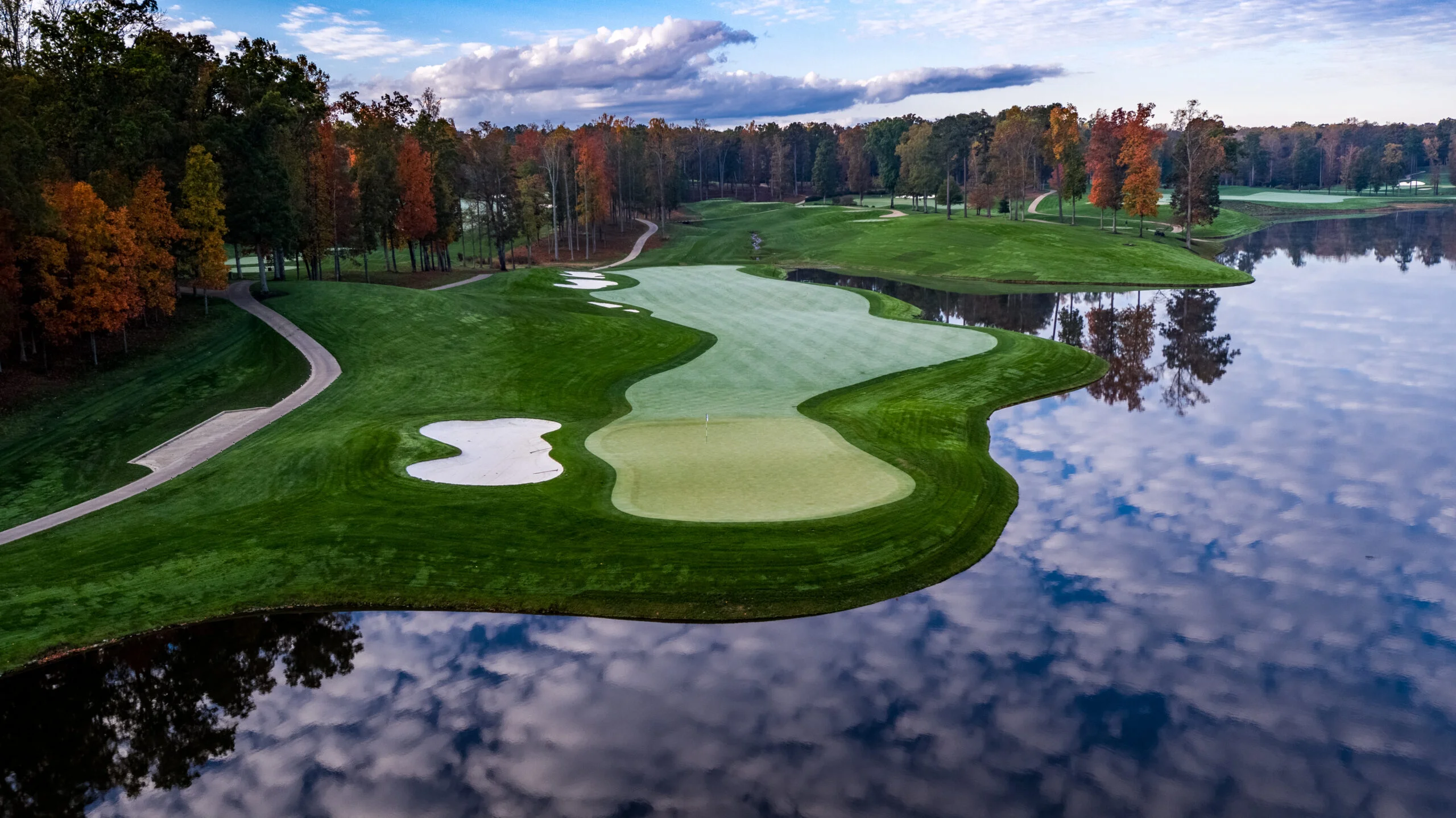
Opened 2001, named Virginia's top course by Golf Digest and Best New Private Course. Hosted 2011 U S Senior Amateur; features rolling terrain, centerpiece lake and driveable par 4s. - Ballyhack Golf Club, Roanoke, Virginia
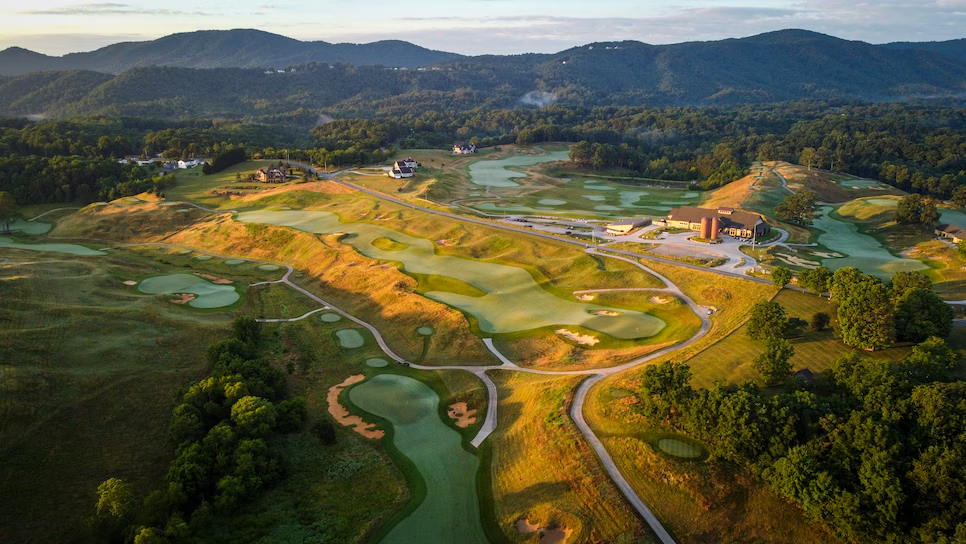
Dramatic Blue Ridge site with steep contours and elevation changes; bold routing suits national club ambitions. - The Greenbrier, Old White Course, White Sulphur Springs, West Virginia
Restored C B Macdonald and Seth Raynor's 1914 design; hosted PGA Tour's Greenbrier Classic. - Country Club of Virginia, James River Course, Richmond, Virginia
Restored William Flynn's layout; part of his "trifecta" at the club including Tuckahoe Creek and Westhampton. - Providence Golf Club, Richmond, Virginia
Revived a long closed 1966 course into a popular daily fee with rolling, tree lined holes. - North Hills Country Club, Philadelphia, Pennsylvania
Created long range master plan for J Franklin Meehan and William Flynn design around iron mines. - Independence Golf Club, Richmond, Virginia
Redesigned in 2014; hosted State Open of Virginia.
Other works include Abenakee Club, Belle Haven Country Club and brownfield conversions like The First Tee Richmond.
Awards, recognition and contributions
Kinloch earned top Virginia honors and national acclaim. George's restorations of Flynn, Ross, Macdonald, Raynor, Banks and others have drawn praise for authenticity. A member of the American Society of Golf Course Architects, he has innovated on landfills and practice areas.
His First Tee commitment provides accessible golf, with Chesterfield as the U S premiere 18 hole facility.
Interesting facts and legacy
George transformed hazardous brownfields into green oases, proving golf's environmental potential. His orienteering roots inform precise routings, as seen in Kinloch's minimal changes post centerline walks. Ballyhack's rugged terrain demands goats for walking, per some accounts.
Based in Chesterfield, Virginia, George's firm excels in the Mid Atlantic, blending history with forward thinking. For Virginia golf enthusiasts or directories, his restorations preserve heritage while Kinloch and Ballyhack offer modern excellence on stunning land.