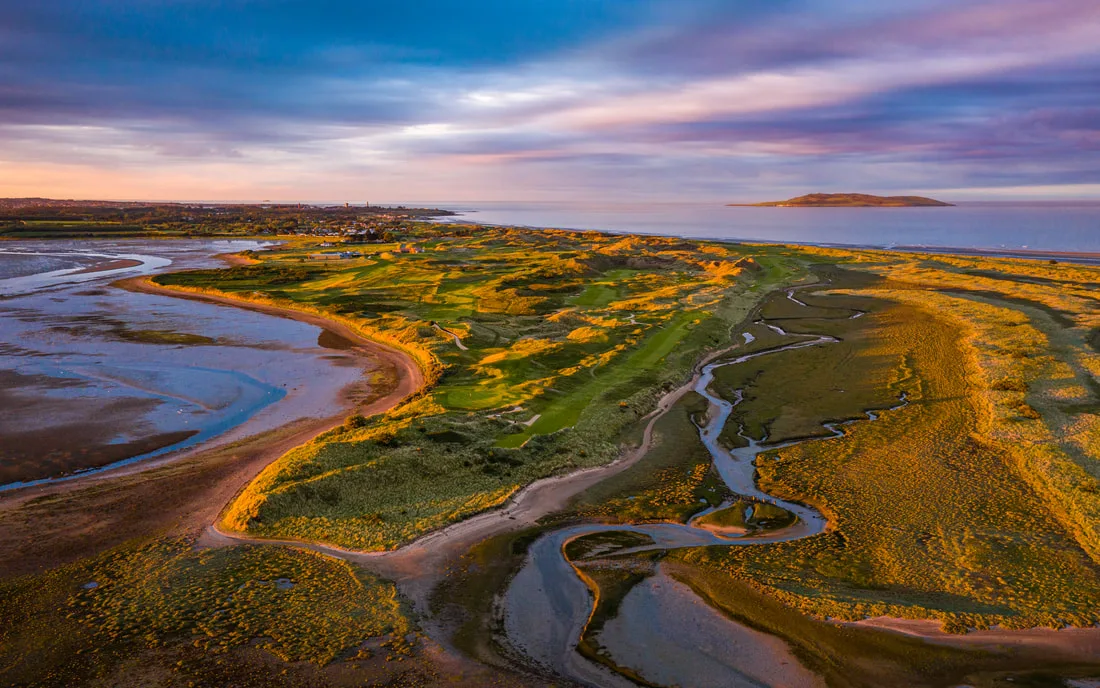
Despite his fame, Hackett never designed a course outside Ireland, his entire portfolio remains on the island.
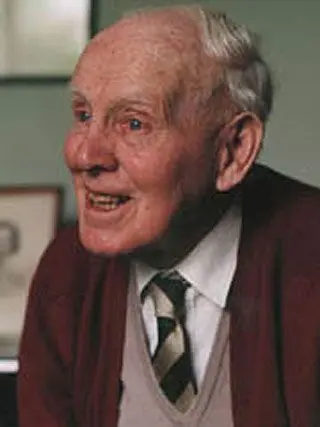
Eddie Hackett was the quiet traditionalist who gave Ireland much of its modern golf identity. Born in Dublin in 1910 and active well into the 1990s, he threaded more than 100 courses through dunes, drumlins and farmland across the island, becoming, in the eyes of many, the godfather of Irish golf course architecture.
Early life and playing career
Eddie Hackett was born in Dublin in 1910, reportedly in a city‑centre pub, twelve years before Irish independence. As a boy he suffered from tuberculosis, which left him without the strength for contact sports, and a doctor recommended golf as a gentler way to stay active. He joined Skerries Golf Club as a junior and later became a five‑handicap player at Hermitage Golf Club before turning professional at age 22.
Hackett’s early professional life revolved around club work and playing. He apprenticed with clubmaker Fred Smyth, who had contributed to Ballybunion’s Old course, giving Hackett a grounding in both craftsmanship and links tradition. He then spent time in Belgium with Henry Cotton and in South Africa with Sid Brews, absorbing ideas from leading players and professionals abroad before returning to Ireland. By 1939 he had become head professional at Portmarnock Golf Club, one of Ireland’s premier links, while also competing, finishing runner‑up in the Irish Professional Championship in 1942 and twice reaching the final of the Michael Moran matchplay in the 1940s.
Late move into golf architecture
Unlike many architects, Hackett did not start designing courses until relatively late in life. Through the 1950s and early 1960s he was best known as a respected professional, instructor and clubmaker, prized for his understanding of swing mechanics rather than for any design portfolio. His first experiments in architecture came almost incidentally, when schools where he was already coaching—such as Rockwell, Clongowes and Gormanston—asked him to lay out modest golf holes on or near their grounds.
The turning point came in the mid‑1960s. In 1967, based on the success of his work at Gormanston College, Letterkenny Golf Club in County Donegal hired him to design a new 18‑hole course at Barnhill, widely noted as his first full‑scale course design. Around the same time he apprenticed with Fred Hawtree’s firm, sharpening his architectural skills before launching into a remarkably productive second career. From then on, course design became his main focus, just as Ireland entered a sustained golf boom.
Design philosophy: nature first, bulldozer last
Hackett’s design philosophy was rooted in old‑fashioned links values and extreme restraint. He famously said, “I find that nature is the best architect… I try to dress up what the Good Lord provides,” a line that neatly captures his minimal‑earthmoving approach. His own policy was “not to move earth unless it is absolutely necessary,” believing that preserving the natural landscape both kept costs down and showcased the Irish countryside at its best.
Most of his courses were true links built on rolling, sandy ground near the sea, with native fescue and very few trees, the same “linksland” that birthed golf centuries earlier. He approached such sites as a discoverer rather than an inventor, routing holes between existing dunes, up onto semi‑blind plateaus and along natural ridges rather than cutting new landforms. On flatter inland or parkland sites like Tuam or Malahide, he still moved very little dirt, preferring crowned fairways, simple pot bunkers and disc‑like greens that sat on or just above the existing grade.
Hackett’s minimalism was partly aesthetic conviction and partly budget reality. Ireland in the 1960s and 1970s had limited resources for lavish construction, and he believed his job was to “find the holes that God provided him, not create those that were not there.” His bunkers were few and functional rather than decorative, each meant to serve an “honest purpose” in strategy rather than merely framing views. The result was golf that felt straightforward in presentation but subtle in how elevation, wind and angles combined to test players over many rounds.
Notable courses and achievements
Hackett’s portfolio is confined entirely to the island of Ireland—more than 100 original designs and renovations scattered from the Inishowen Peninsula to West Cork. He is credited with involvement in almost a third of Ireland’s links, a staggering figure given that links represent less than ten percent of the world’s total number of courses. No job was too big or too small; he extended, tweaked or completely re‑routed everything from basic village layouts to future Top‑100 venues.
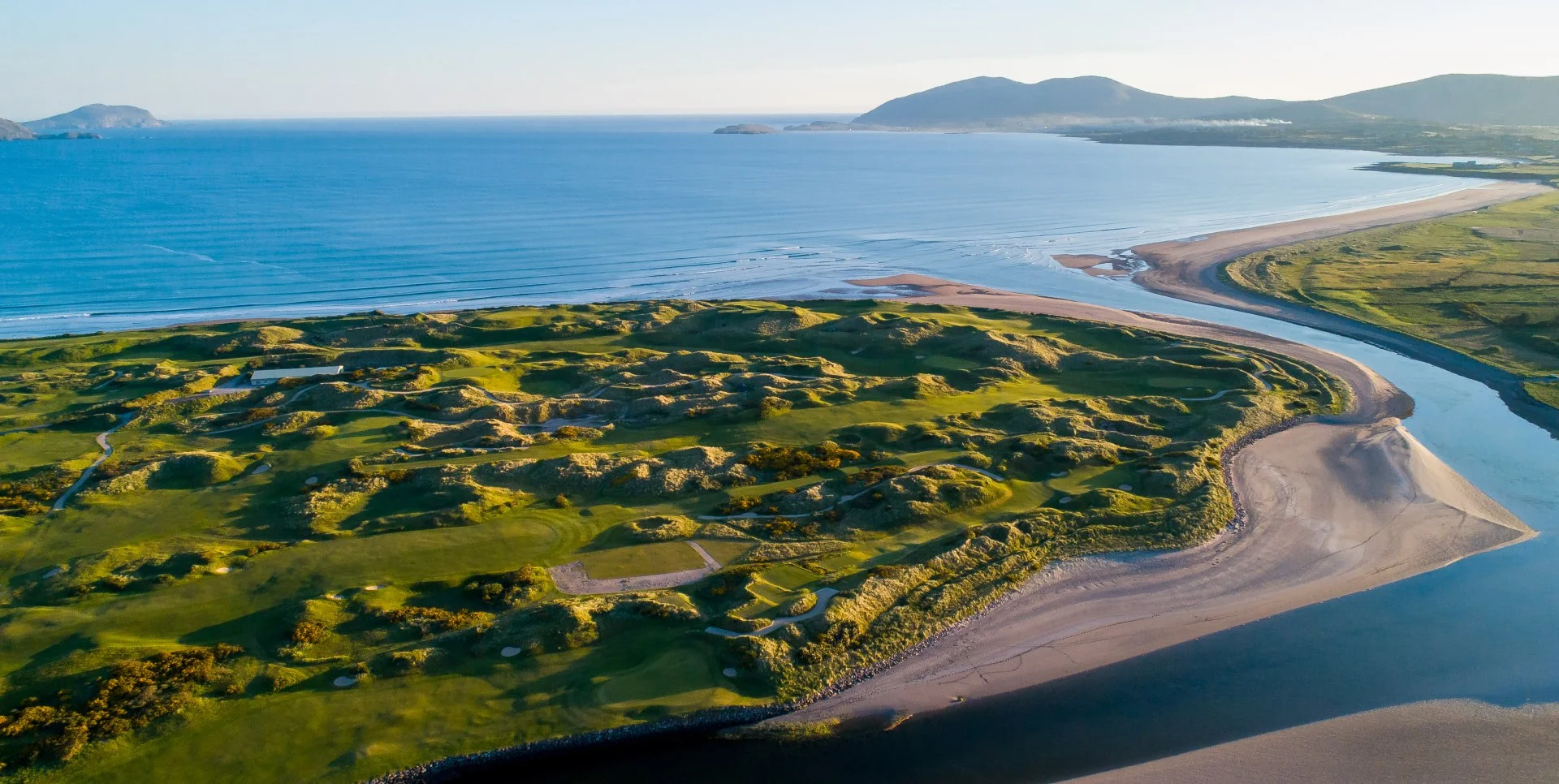
Among his most celebrated work is Waterville Golf Links in County Kerry, widely regarded as his masterpiece. Set on a peninsula along the Atlantic and the tidal Inny Estuary, Waterville provided what one writer called “the site of a lifetime,” with Hackett’s routing weaving through both gentler dunes and a dramatic, epic inward nine. Later renovations by Tom Fazio refined the front nine, but Hackett’s original strategic backbone and hole corridors remain central to the course’s identity.
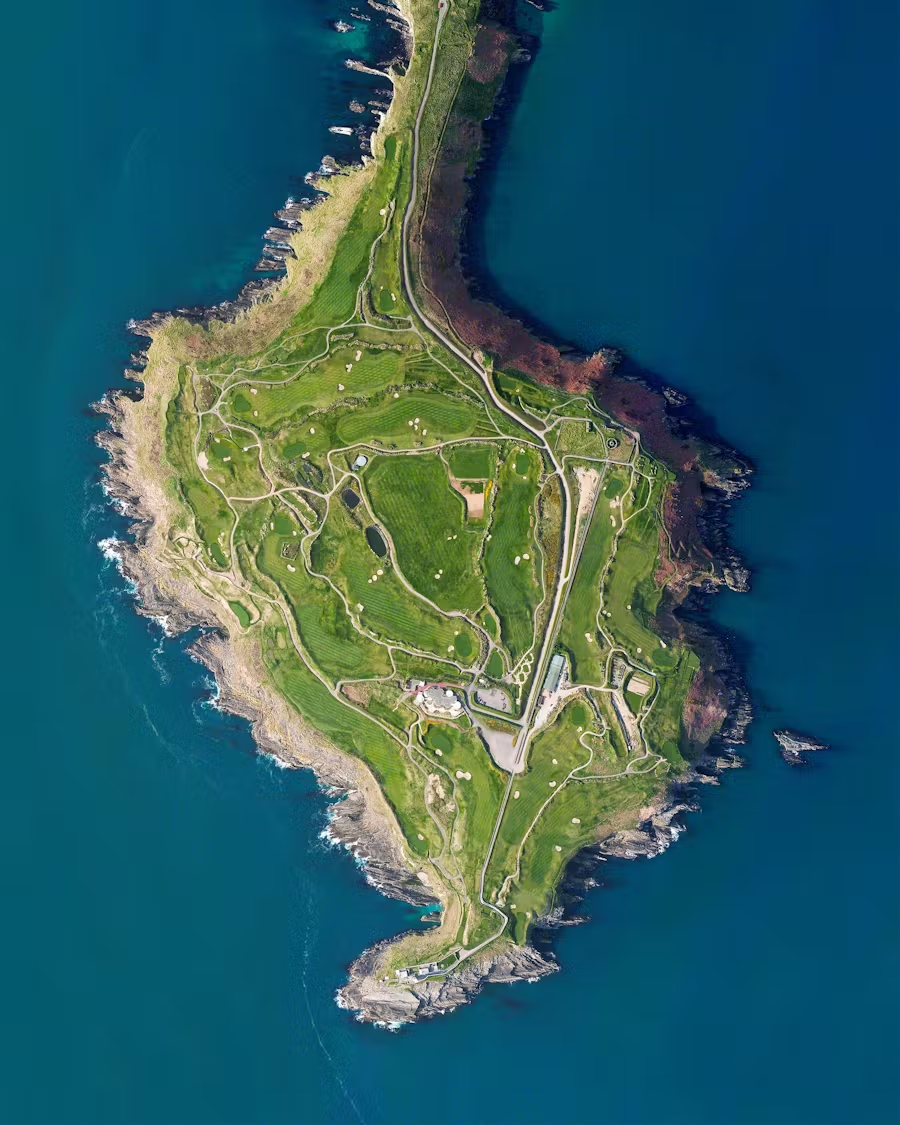
His modern links résumé along Ireland’s west and north‑west coasts is the envy of many architects. Moving roughly north to south, Hackett was significantly responsible for the Old Links at Ballyliffin, work at Rosapenna, Donegal (Murvagh), Enniscrone, Carne (Belmullet), Connemara, Ceann Sibéal (Dingle) and Waterville, each set in spectacular dunes that required both creativity and restraint. On duneless or subtler land at places like Ballyliffin and Donegal, he relied on microundulations and wind rather than massive landforms to create interest.
Hackett also produced notable inland and parkland courses. His portfolio includes designs or modifications at Ballinrobe, Bantry Bay, West Waterford, Ashford Castle, Athenry, Ardee and many more, often providing affordable, accessible golf for small communities. Many of his courses continue to appear on lists of Ireland’s top 100, a testament to their enduring strategic value and their ability to hold up in an era of longer equipment and changing tastes.
Role in Ireland’s golf boom and professional life
Hackett emerged as Ireland’s go‑to architect just as the game began to expand. After the 1960 Canada Cup at Portmarnock raised international attention on Irish golf, demand for new courses grew across the island, and there were very few domestic architects available. For all practical purposes, Hackett later said, he was “Ireland’s only golf architect,” since English designers were available but “expensive,” and he himself freely admitted that he had “always been charging too little” for his work.
In the 1960s he also worked for the Golfing Union of Ireland, giving clinics and instruction around the country, which further raised his profile and connected him with clubs looking to build or upgrade their courses. His reputation for being cost‑conscious, practical and sympathetic to local needs made him the default choice for new and re‑designed courses, especially in rural or coastal areas where budgets were tight but land was often spectacular.
Hackett’s professional background meant he remained a teacher at heart. His expertise in swing theory and golf mechanics informed the shot values he built into his designs, producing holes that rewarded thoughtful play rather than brute strength. Even as his architectural workload grew, he retained the perspective of a club professional—concerned with how members used the course day after day, how it held up in bad weather, and how much it cost to maintain.
Interesting facts and lasting legacy
A number of details and anecdotes make Eddie Hackett’s story particularly compelling. He is often described as having been born in a Dublin pub in 1910, a fitting origin story for someone so closely tied to Irish culture and club life. His youth illness—tuberculosis—turned from misfortune into destiny when his doctor prescribed golf, setting him on a path that would shape Ireland’s golf landscape for decades.
Hackett’s dedication to affordable, accessible golf shows up in stories such as his work at Ballyconneely (now Connemara) where, according to one account, he offered to mark out tees and greens for a “pittance” to help a cash‑strapped club create as challenging a course as possible. He never designed outside Ireland, something almost unique among major architects, and his entire body of work forms a kind of atlas of Irish golf development in the second half of the twentieth century.
Contemporary architects often regard Hackett as a bridge between the so‑called “dark ages” of over‑shaped, penal design and today’s minimalist revival. Some critics note that his shaping could appear simple or repetitive by modern standards, with tees often on high points and greens on plateaus or hollows, but even they recognize the underlying integrity of routing that followed natural logic. For many Irish golfers, his courses are less about Instagram‑ready visuals and more about honest, wind‑shaped golf that feels inseparable from the landscape.
Eddie Hackett died in 1996, the same year as fellow architect Donald Harradine, but his influence is arguably more visible today than ever. As players and architects rediscover the virtues of minimal disturbance, local character and strategic subtlety, Hackett’s work—particularly at Waterville, Carne, Ballyliffin and Connemara—stands as a quietly persuasive model. For anyone planning a golf trip to Ireland or building an SEO‑friendly directory of great courses, knowing his name is essential: follow the Hackett trail, and you’re effectively tracing the story of Irish golf itself.
%202.webp)