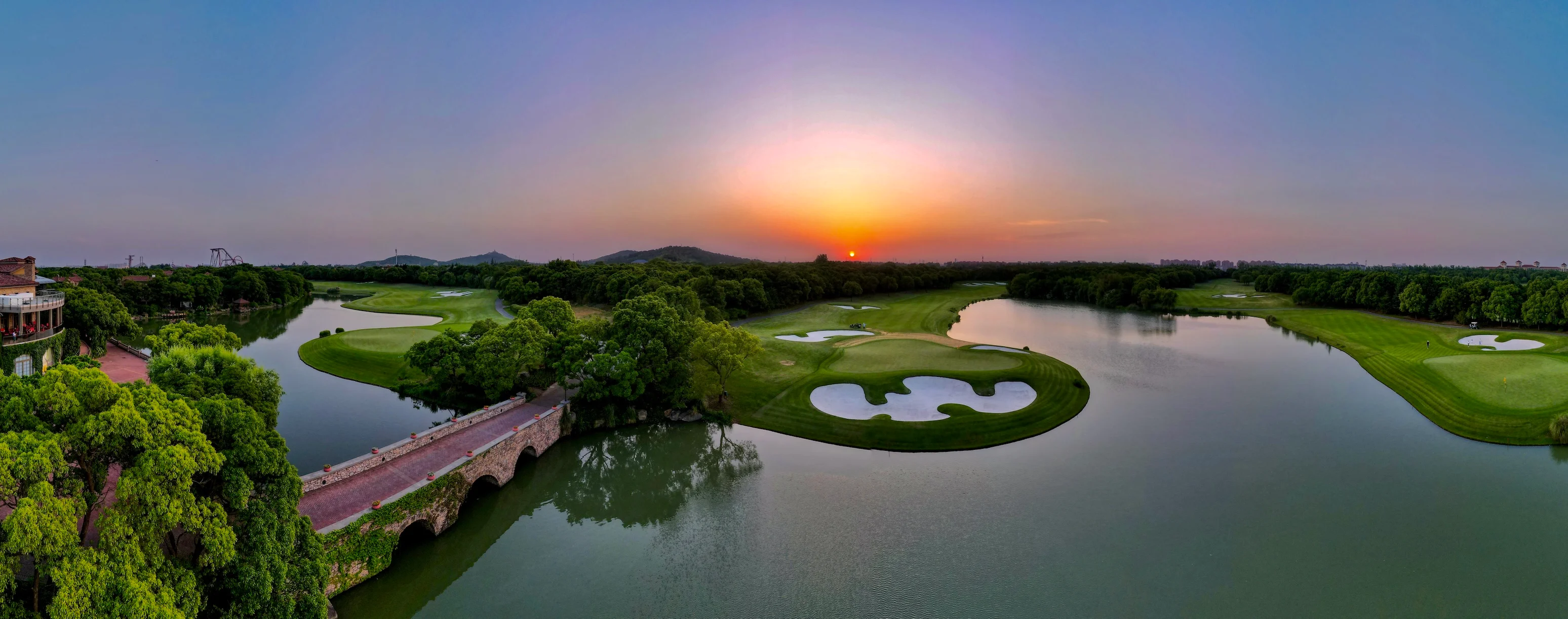

Neil Haworth and his firm Nelson & Haworth were responsible for designing nearly 10% of all golf courses in China, significantly shaping the nation's golf landscape
Neil Haworth was one of the central figures in the rise of modern championship golf in Asia, a Canadian architect who quietly helped define how elite tournament and resort golf looks and plays across China, Southeast Asia and beyond. From Sheshan International in Shanghai to the high altitude halls of Jade Dragon Snow Mountain, his work blended tour level strategy with a sharp feel for local conditions and everyday members.
Early life and career
Neil Haworth was born in Edmonton, Alberta, in 1961 and grew up in Canada before embarking on a career that would make Asia his home base. He earned a bachelor’s degree in landscape architecture from the University of Guelph and initially worked with Canadian architect Graham Cooke at Graham Cooke and Associates, gaining early experience on a mix of North American projects.
In 1990 Haworth relocated to Singapore to join the firm Nelson and Wright, the practice founded by American architect Robin Nelson. This move placed him at the center of a rapidly expanding Asian golf market just as countries like China, Vietnam and Thailand began to invest heavily in courses for tourism and real estate. Haworth’s combination of landscape architecture training and willingness to live in the region quickly made him one of the go to architects for serious projects across Asia.
Nelson and Haworth and leadership in Asia
Through the 1990s the Nelson and Wright practice evolved into Nelson and Haworth as Haworth became Robin Nelson’s full partner. From 2000 onward he served as chairman of Nelson and Haworth Golf Course Architects, with overall responsibility for design direction and many on site decisions across a diverse portfolio. After Nelson’s death in 2013 the firm retained the Nelson and Haworth name in his honor, with Haworth and partner Brett Mogg continuing to lead projects across Asia and beyond.
Haworth was based for many years in Shanghai, using it as a hub for work throughout China, Southeast Asia and the wider region. Under his leadership the firm designed courses in countries such as China, Japan, Vietnam, Pakistan, Australia, the United States and France, as well as significant renovations and masterplans in places like the Philippines. The Asian Golf Industry Federation noted that he became one of the most influential designers in Asia, with a long track record of collaborating with investors and governments to build modern tournament venues and destination resorts.
Design philosophy and approach
While Haworth did not always speak in big slogans about philosophy, his work reveals several clear themes. First, he focused on creating strategic, tour ready courses that could still be enjoyed by average members from appropriate tees, an approach exemplified by Sheshan International where the HSBC Champions event is staged on the same routing that regular players use year round. Second, he paid close attention to climate and agronomy, which was critical for high performance golf in hot, humid or high altitude Asian sites.
Nelson and Haworth’s projects typically feature clean, modern shaping, sizable but fair landing areas, and greens with enough contour to challenge elite players without overwhelming resort golfers. At Sheshan, Planet Golf notes that the course combines “countless water bodies, flashy sand bunkers and quick, contoured greens” to create a stern championship test that remains enjoyable from forward tees. At Jade Dragon Snow Mountain, the emphasis is on harnessing the dramatic setting and altitude, with wide fairways and large greens that acknowledge both the ball’s extra carry and the visual drama of the surrounding peaks.
Haworth’s projects also reveal a willingness to go big when the site invites it. Jade Dragon, stretching 8,548 yards from the back tees at about 3,100 meters above sea level, is recognized as one of the longest regulation par 72 golf courses in the world, a deliberate response to both altitude and the client’s goal of a signature, record breaking layout. At the same time, he was pragmatic about member playability, ensuring multiple teeing options and routing that allowed less experienced golfers to navigate the course without constant forced carries.
Notable courses and achievements
Haworth’s portfolio includes many of Asia’s best known modern courses. Among the most prominent are:
- Sheshan International Golf Club, Shanghai, China
Built in 2004, Sheshan is one of China’s highest profile clubs and has hosted the World Golf Championships HSBC Champions event, showcasing Haworth’s work to a global television audience. The course is known for its immaculate conditioning, dramatic lakes and bunkering, and a finishing stretch that can swing leaderboard positions quickly, making it a favorite among touring professionals. - Jade Dragon Snow Mountain Golf Club, Lijiang, China
Located at the base of Yunnan’s Jade Dragon Snow Mountain, this 18 hole course is routed in a valley that offers sweeping mountain views. At 8,548 yards from the back tees it has been billed as the longest regulation par 72 course globally, using altitude to create both challenge and spectacle. - Shenzhen Golf Club, Shenzhen, China
The Nelson and Haworth website notes Haworth’s design work at Shenzhen Golf Club, one of the earliest and most important modern clubs in southern China, which helped anchor the region’s golf boom. - Golf Saint Raphaël, Quebec, Canada
Haworth’s work was not limited to Asia. Golf Course Architecture highlights Golf Saint Raphaël in Canada as one of his notable designs, showing his ability to translate his style back to North American contexts. - Island Course, Singapore Island Country Club, Singapore
Haworth led a major rebuild of the Island Course at Singapore Island Country Club, updating one of Singapore’s classic venues with modern strategy and infrastructure while respecting its established membership culture.
In addition, Nelson and Haworth’s project list includes courses in Pakistan, Vietnam and Australia, along with masterplans such as the 36 hole redevelopment at Mimosa Golf and Country Club in the Philippines for developer Filinvest. In Mimosa’s case, Haworth and Mogg were brought in to reverse years of underinvestment and reposition the property as a modern, resort oriented facility.
Life in Asia and professional recognition
Haworth lived for much of his career in Asia, particularly in Shanghai and Singapore, traveling constantly across the region for site visits, presentations and construction oversight. Colleagues described him as living a “rich and interesting life, full of love, laughter and travel” with strong personal ties in both Asia and Canada. His long term presence in the region gave him a deep understanding of local cultures and development patterns, which in turn made him a trusted advisor to both government backed projects and private developers.
He was an active member of the American Society of Golf Course Architects and the Asian Golf Industry Federation. The ASGCA profile notes his years of international experience, and the Federation credited him with playing “a pivotal role” in the growth of golf in Asia. Through Nelson and Haworth he also mentored younger designers like Brett Mogg, who continues to carry the firm’s work forward.
In June 2024, Haworth died in Ottawa, Ontario, at age 63 following a battle with cancer. Tributes from across the industry emphasized both the quality of his marquee designs and his personal warmth and generosity with colleagues, clients and construction teams.
Interesting facts and legacy
Several points capture the significance of Neil Haworth’s contribution to golf architecture. He was one of the relatively few Western architects to base his entire career in Asia, rather than flying in periodically, which helped him tune his work to local players and conditions. His courses include both one of China’s most visible tournament venues at Sheshan and one of the longest regulation courses in the world at Jade Dragon, giving his portfolio both prestige and a touch of record book notoriety.
Although best known for Chinese and Southeast Asian projects, Haworth’s footprint also reaches back to his home country with work such as Golf Saint Raphaël, reinforcing his status as a genuinely international designer. Within the profession, he is remembered as a bridge figure in Asia’s golf development, connecting the generation of Robin Nelson with modern architects who now see China, Vietnam and other markets as core parts of the global golf landscape.
For anyone mapping world class golf in Asia, Haworth’s name is unavoidable. His designs at Sheshan, Jade Dragon and key clubs in China, Singapore and beyond helped set the standard for championship venues that can challenge the world’s best while remaining playable and attractive to local members, a legacy that will keep his influence visible on leaderboards and scorecards for years to come.